|
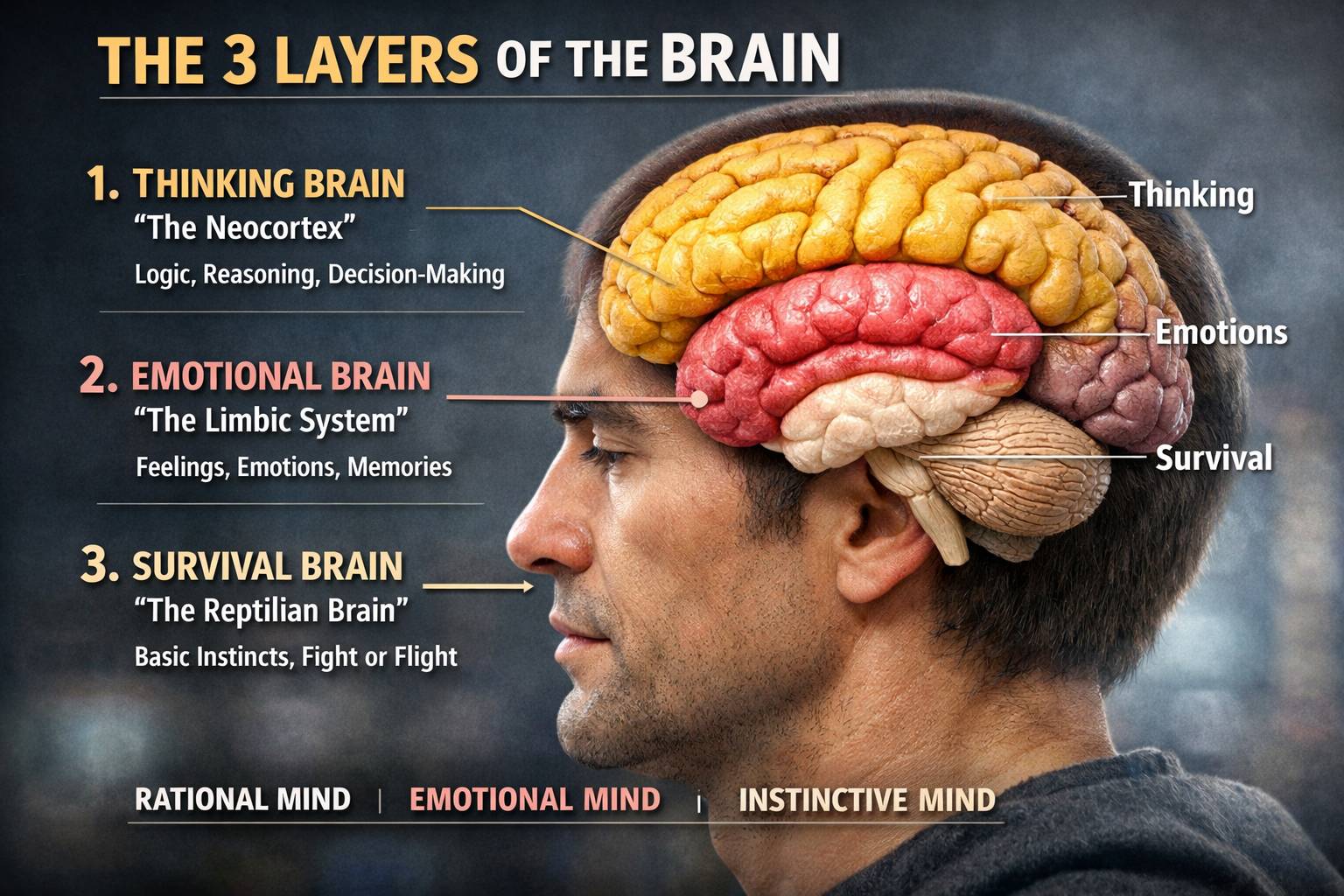
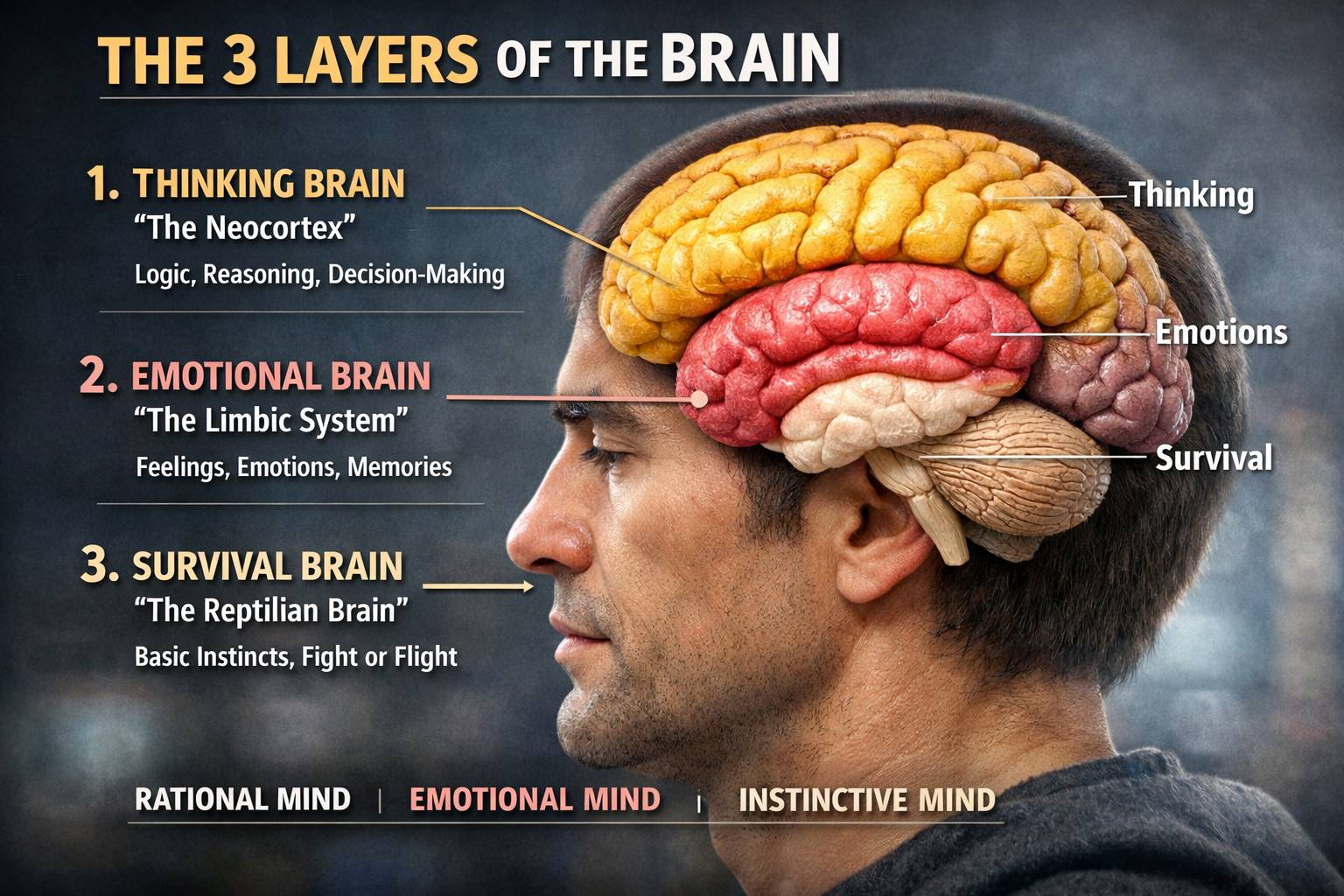
Hey Reader, A couple of weeks ago, I walked into an elementary school for Career Day. The first room I visited was hilarious. Twenty kindergartners sat cross-legged on a colorful carpet, each parked on their own little numbered dot from 1 to 20, surrounded by tiny plastic chairs. Instead of just telling them what I do as a coach, I decided to show them. Over the course of the day, I turned nine classrooms, from kindergarten all the way up to sixth grade, into a live human lab. I didn't want to bore them with health rules. I wanted them to feel how fast their bodies could boss their brains around. So I started with one simple question. “What's more powerful, the mind or the body?” Every single kid shouted back at the top of their lungs, “The mind! The brain!” Rats. Everybody got it wrong. So, we ran an experiment. I had them sit like a tired adult at a desk: shoulders slouched, head hanging, mouth slightly open, staring at an imaginary screen. While stuck in that posture, I told them to try and feel pure joy. Nothing happened. Next, I had them jump up and down, stand tall, smile, and laugh. Instant joy. Then we flipped it. I had them go back into that slouched desk posture and think of a moment in their life that made them really sad. Within seconds, the energy in the room completely sunk. It got dead quiet. You could feel the heaviness sitting on those kids because that physical position naturally pulls sadness right out of you. While they were still holding onto that same sad thought, I had them jump up and down and smile again. Just like that, the sadness broke. Here's the wild part… When I asked the kindergartners and third graders how they make themselves feel better when they're down, they said things like, “Run around!”, “Jump up and down!”, or “Go outside and play!” By the time I got to the sixth graders, their answers changed. They said they watch movies or try to “think better thoughts.” Somewhere between the third grade and the growing up, we get trained to ignore our bodies. Think about you at 3:12 PM on a Tuesday… You're sitting in your chair, shoulders crept up to your ears, staring at a blinking cursor while your brain's completely fried. Your body's parked in neutral, but your internal engine's red-lining at 5,000 RPMs. And you can't think your way out of a thinking problem. Trying to escape bad thinking with more thinking is like a dog chasing its own tail.
If you're a high achiever, you probably try to brute-force your way out of that afternoon fog with willpower or another cup of coffee. That's the Thinker's Trap. Your conscious mind is the CEO, and it loves logic and grit. But your nervous system is the Bouncer. When you're stressed and slouched over a desk, the Bouncer locks the doors. You can't argue with the Bouncer using positive thoughts. You have to use your breath and posture to prove you're safe first. Move the body, and the mind finally follows. It sounds almost insultingly simple that basic posture and breathwork can flip your mental state. I doubted it too, and so did plenty of my executive clients. Don't take my word for it… Test it right now while you're reading this: unglue your back from your chair, drop your shoulders away from your ears, close your mouth, and take one slow, four-second inhale through your nose. Feel that tiny drop in tension? That's your manual override switch. You just stepped out of your head and back into your body. Now imagine if your whole life you felt like this?
PS: Isn't it funny how we spend the first five years of a kid's life cheering them on to walk and talk, and the next twelve years telling them to sit still and be quiet? Then we hit 40, buy a fancy ergonomic desk chair, and wonder why our backs hurt and our brains are fried… |